
If you are dealing with a toddler hitting during tantrums, you are not alone. Many parents go through this confusing stage and wonder what they are doing wrong.
It happens so fast. One minute, your toddler is crying because you said no to another biscuit. The next minute, they hit you. Maybe it caught you off guard. Maybe it hurt. Maybe it made you feel angry, embarrassed, or even guilty for feeling angry.
If your toddler is under five and hitting during tantrums, please hear this first: you are not alone.
So many parents go through this stage. It does not mean your child is aggressive. It does not mean you are failing. It means your child is still learning how to handle very big feelings in a very small body.
Let’s talk honestly about why toddlers hit, and how you can respond in a way that protects both your child’s growth and your own peace.
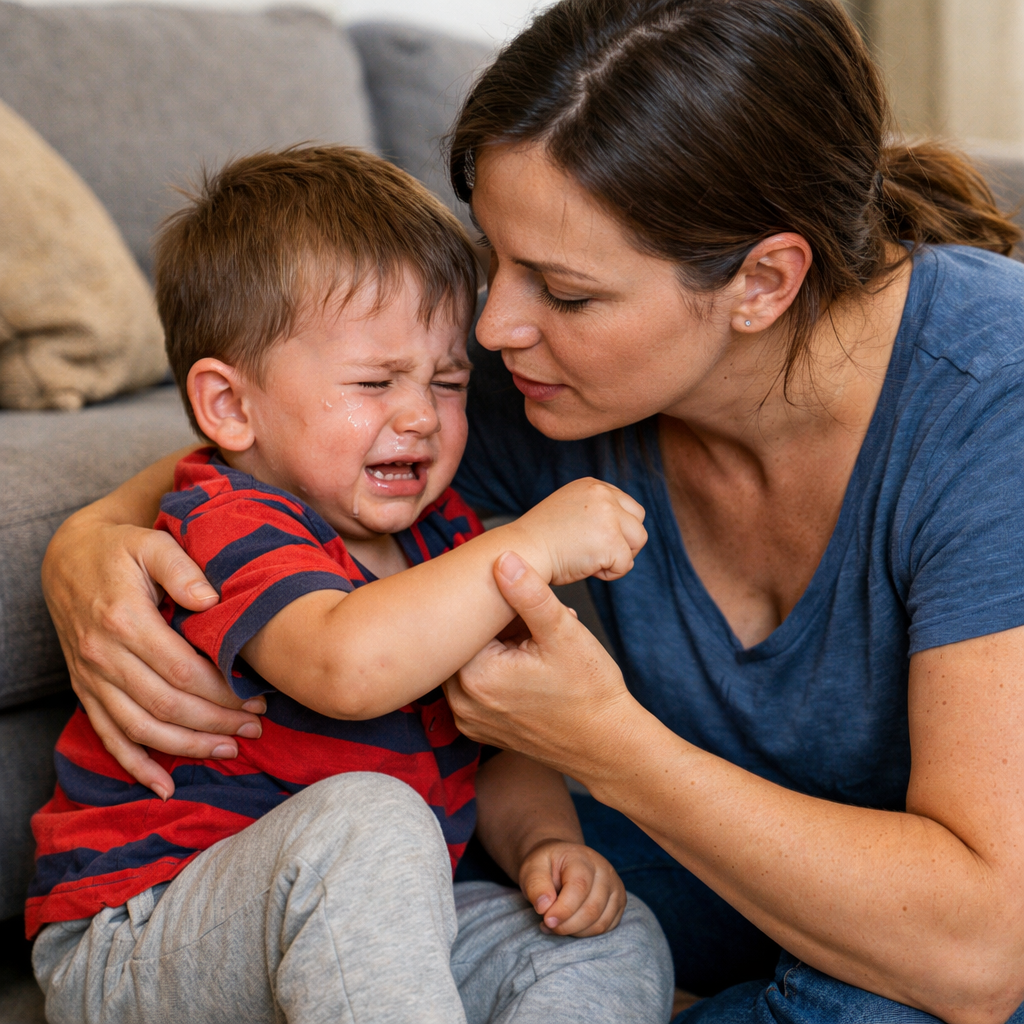
Why does toddler hitting during tantrums happen?
Toddlers feel emotions intensely. When they’re frustrated, they don’t just feel a little annoyed — they feel overwhelmed. When they’re tired, they don’t just feel sleepy — their whole system struggles. When they’re told “no,” it can feel like the end of the world to them.
But here’s the challenge: they don’t yet have the language or self-control to express those emotions properly, so their body reacts.
Hitting, kicking, throwing — these are often physical expressions of feelings they cannot name. Under age five, children are still developing emotional regulation. Their brains are growing rapidly, but self-control is one of the last skills to mature.
Hitting during tantrums is usually not about wanting to hurt you. It’s about not knowing what else to do with anger, frustration, or disappointment.
Understanding this doesn’t excuse the behavior — but it helps you respond with clarity instead of panic.
Is Toddler Hitting a Phase
For many families, toddler hitting is a phase. It often starts between ages 1 and 3, when children feel strong emotions but dont yet have the words orself control to express them properly.
The toddler-hitting phase usually diminishes as language skills improve and children learn better ways to manage frustration. With calm boundaries and consistent guidance, most children outgrow this behavior naturally
What Not to Do When Your Toddler Hits
When your toddler hits you, it can trigger something deep inside. You might feel disrespected. You might feel shocked. You might even feel like you need to “correct” the behavior immediately and firmly.
But reacting out of anger often escalates the situation.
Here are some common reactions that usually make things worse:
- Hitting back to “teach a lesson.”
- Yelling loudly in frustration.
- Giving long explanations while they are still screaming.
- Shaming them by saying, “You’re being bad.”
- Completely ignoring repeated hitting without setting boundaries.
When a child is mid-tantrum, their brain is not ready for reasoning. In that moment, they need calm containment, not punishment.
Your job is not to overpower them. Your job is to guide them.
Calm Ways to Respond When Your Toddler Hits
The goal is simple: stay steady.
You don’t need a perfect script. You just need a calm presence.
If your toddler hits during a tantrum, try this:
First, gently but firmly stop the hitting. You can hold their hands softly and say, “I won’t let you hit.”
Keep your voice low and controlled. A calm voice signals safety.
Get down to their eye level if possible. It reduces power struggles and helps them feel seen.

Use short, clear phrases like:
- “Hitting hurts.”
- “I can’t let you hurt me.”
- “You’re very angry.”
Avoid over-talking. During big emotions, less is more.
If needed, move them to a quiet and safe space until the intensity lowers. Not as punishment — but as protection and reset.
The most powerful tool in that moment is your calm body. When you regulate yourself, you help regulate them.
Teach What To Do Instead of Hitting
The real teaching happens after the storm has passed.
When your child is calm again, that’s your opportunity to build skills.
This is when you can say:
“You were very angry earlier.”
“Next time, you can say ‘I’m angry’ instead of hitting.”
Teach simple feeling words. Practice them during normal moments, not just after problems.
You can also:
- Show them how to use “gentle hands.”
- Practice taking deep breaths together.
- Role-play what to do when upset.
- Encourage stomping feet or squeezing a pillow instead of hitting.
- Praise them when they handle frustration well.
Children repeat behaviors that get attention. If calm behavior gets positive attention, it grows stronger.
Consistency is more important than intensity.
How Parents Can Stay Calm During Tantrums
Let’s be honest — toddler tantrums can drain you.
Especially if you are already tired. Or stressed. Or dealing with other responsibilities.
Staying calm does not mean you feel calm. It means you choose your response carefully.
Here are gentle reminders for yourself:
Take one deep breath before reacting.
Remind yourself: “This is development, not defiance.”
If safe, step away for a few seconds to collect yourself.
Ask yourself basic questions: Are they hungry? Overtired? Overstimulated?
Most importantly — don’t expect perfection from yourself.
You are learning too.
Parenting is emotional work. And it’s okay to admit that some days are harder than others.
When Should Parents Be Concerned?
Most toddler hitting during tantrums is a normal developmental stage.
However, it may be helpful to seek guidance if:
- The hitting is extremely intense or frequent.
- Your child intentionally tries to seriously hurt others regularly.
- Tantrums last a very long time and happen daily.
- You feel completely overwhelmed and unsure how to manage it.
Reaching out for support does not mean something is wrong. It means you care enough to seek understanding.
But for many families, this phase improves with steady boundaries and emotional coaching.
Conclusion
Toddlers who hit during tantrums are not “bad children.” They are children with big emotions and limited tools. Every time you respond calmly, hold a boundary, and guide them toward better choices, you are teaching emotional strength. You are showing them that feelings are safe — but hurting others is not. This stage can feel exhausting, but it is temporary. The lessons you teach now will shape how they handle anger for years to come.
Action Steps for Parents:
- Pause and take one deep breath before responding.
- Gently stop the hitting and say, “I won’t let you hit.”
- Use short, calm phrases instead of long lectures.
- Teach feeling words during calm moments.
- Praise gentle behavior immediately.
- Stay consistent — even when progress feels slow.
- Remind yourself: this phase will pass.
You are not alone in this. You are raising a human who is still learning how to manage emotions — and that takes time.
And you are doing better than you think. 💛
learning how to respond to toddler hitting during tantrums takes patience, but calm guidance helps children develop better emotional control over time.