
“Is toddler hitting a phase… or is something wrong?”
That question crosses many parents’ minds the first time their toddler hits them — or hits another child. It can feel shocking, confusing, and sometimes even a little hurtful.
If you’re going through this, take a deep breath. You’re not alone, and you’re not doing anything wrong.
For many children, toddler hitting is a phase. But it’s also a moment that needs guidance, patience, and understanding.
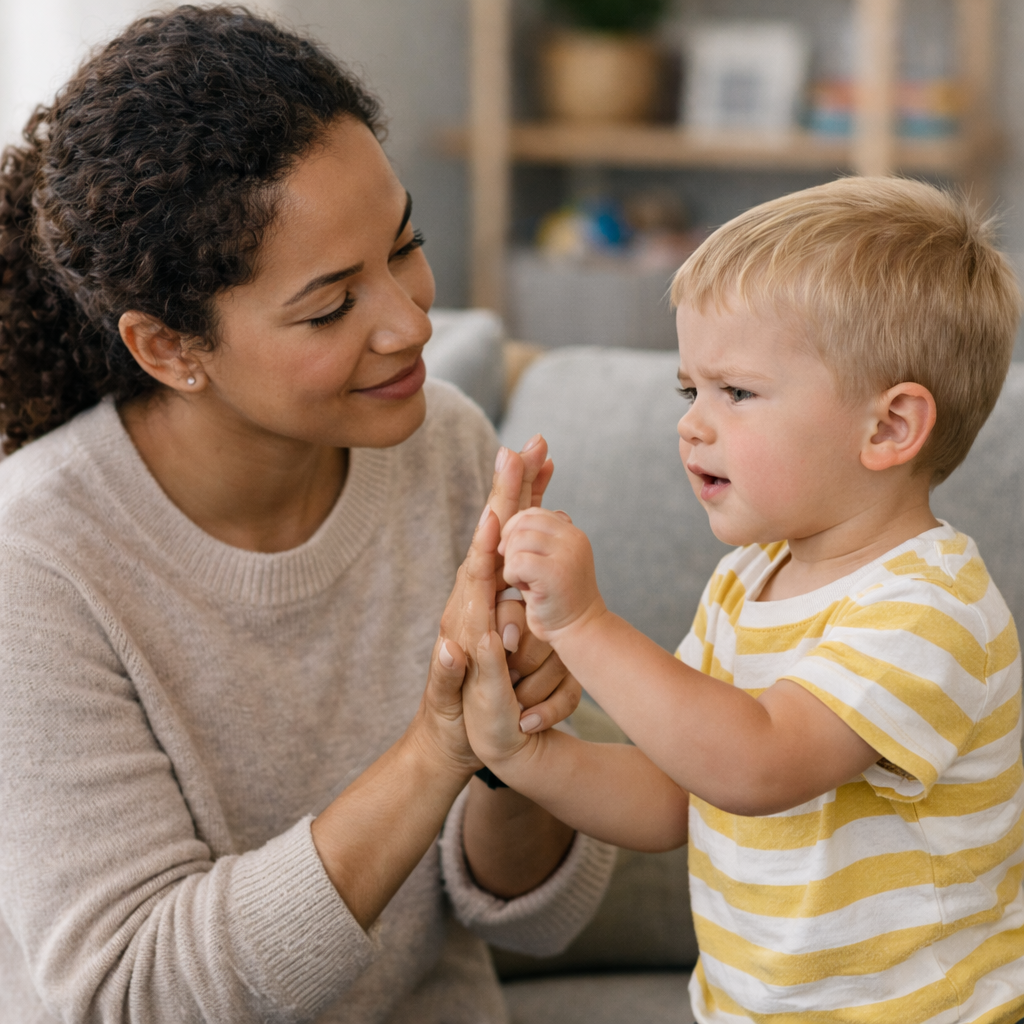
Is Toddler Hitting a Phase?
For many toddlers, yes — hitting is a phase.
It often shows up between ages one and four. This is a stage where children are full of big emotions but don’t yet have the words or self-control to express them properly.
So instead of saying, “I’m angry,” or “I don’t like that,” they use their body.
That might look like:
- hitting
- pushing
- throwing
The important thing to understand is this:
your toddler is not trying to be bad — they are trying to communicate.
And with time, guidance, and consistency, most children grow out of this behavior.
Why does this Phase Happen?
Toddlers feel everything strongly.
Frustration, anger, tiredness, hunger — it all builds up quickly. And because they don’t yet know how to manage those feelings, they act them out.
Hitting often happens:
- during tantrums
- when they feel ignored
- when they can’t have something
- when they are overwhelmed
Sometimes it also happens because they are learning from what they see. You may also notice that hitting happens more during emotional outbursts. If your child often hits during meltdowns, you can also read more about toddler hitting during tantrums.
Can Parents Accidentally Teach Toddlers to Hit?
This is an important and honest question.
If a toddler is disciplined by being hit, even just a tiny hit or act of it, they may learn that hitting is an acceptable way to respond to problems.
Young children learn more from what we do than what we say.
So if the message is:
- “Don’t hit” (words)
- but also hitting happens (actions)
…it can be confusing, and it messes up for them.
This doesn’t mean a parent is “bad.” It just means toddlers copy behavior very quickly, and being mindful of this can really help.
If you want your child to stop hitting, the most powerful teaching is:
showing calm, firm, non-violent responses.
What To Do In The Moment When Your Toddler Hits
When it happens, try to stay steady — not perfect, just steady.
You can:
- gently stop their hands
- say, “I won’t let you hit”
- keep your voice calm and firm
- get down to their level
Then name the feeling:
- “You’re angry”
- “You didn’t like that”
Simple words help them connect feelings to language over time.
What If Your Toddler Hits Other Children but Not the Parent?
This can feel confusing.
Sometimes toddlers behave differently with other children because:
- they feel unsure how to share
- they get frustrated quickly
- they don’t yet understand social boundaries
In some cases, a toddler may hit another child because they feel that child is taking attention away from them, especially from a parent or caregiver.
So yes — it can sometimes be linked to jealousy or competition for attention.
What helps:
- stay close during play
- guide gently: “We use gentle hands”
- step in early before frustration builds
They are not being mean — they are still learning how to be with others.
What If a Toddler Only Hits a Parent in Front of Others?
This is another situation many parents notice.
Sometimes toddlers behave this way because:
- they feel safest with that parent
- they release emotions where they feel secure
- they want attention in that moment
- they are overwhelmed by the environment
It may look like targeted behavior, but often it’s about:
“This is where I feel safe enough to let it out.”
That doesn’t mean it should be allowed — but it helps you understand it, and it is a chance for a parent to teach by showing and find out more about why toddlers hit their parents.
What Not To Do During This Phase
It’s easy to react emotionally, but try to avoid:
- hitting back
- shouting in anger
- shaming or labeling your child
- long lectures during a meltdown
These responses often increase frustration instead of teaching and can have a negative impact on the child as they grow
How To Help Your Toddler Move Through This Phase
This is where real change happens.
You can:
- teach simple feeling words daily
- model calm behavior
- show what “gentle hands” look like
- stay consistent in your response
- praise positive behavior
Children learn through repetition. What you do again and again becomes their guide.
When Should You Be Concerned?
Most toddler hitting improves with time.
But you may want to look closer if:
- it is very frequent
- it becomes more intense
- your child hurts others regularly
- you feel overwhelmed and unsure what to do
Getting support is okay. It doesn’t mean something is wrong — it means you care.
Conclusion
Toddler hitting can feel upsetting, but for many children, it is part of learning how to handle big emotions in a small body.
Your child is not trying to hurt you. They are trying to express something they don’t yet understand.
The way you respond — calmly, firmly, and consistently — becomes the lesson they carry forward.
So, if you’re in this phase right now, take a deep breath. You are not alone in this. Keep showing up, keep guiding, and keep choosing calm where you can. By choosing calm, you are choosing both you and your child.
And if this helped you, share it with another parent who might need a little reassurance today. 💛