
Toddlers can experience many emotions in one day. They may be excited while playing, frustrated when something does not work, angry when they hear “no,” and crying a few minutes later because they feel overwhelmed.
Learning how to support children’s emotional development does not mean trying to keep your child happy all the time. It means helping them understand their feelings, express them safely, and gradually learn what to do when those feelings become difficult.
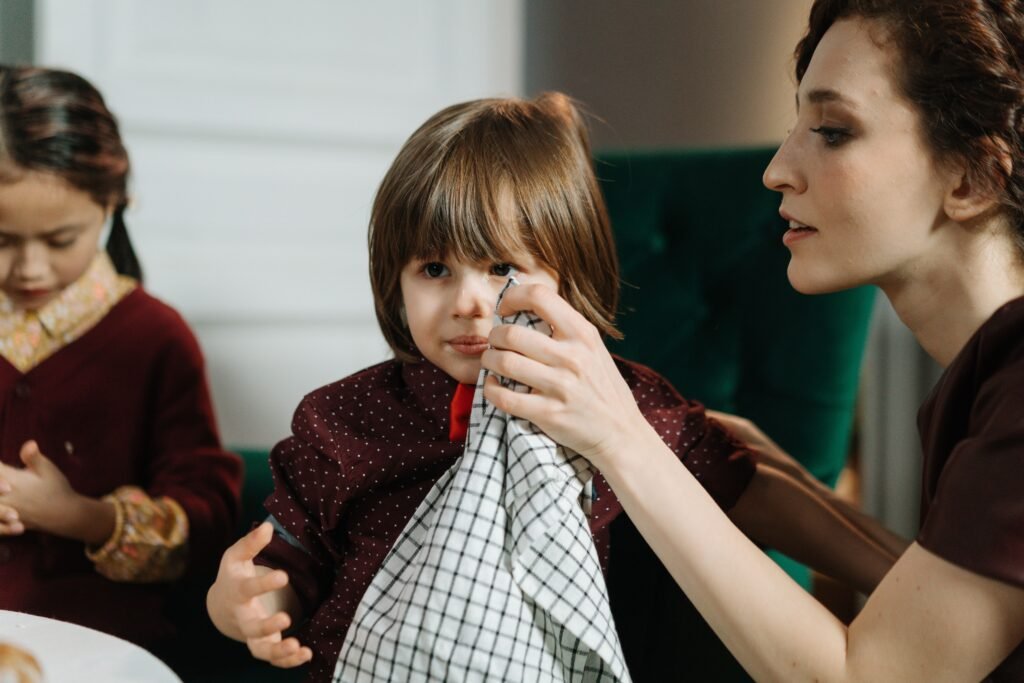
Understanding why emotional development matters in early childhood is a good starting point, but parents may also wonder what they can actually do to support it. The good news is that emotional development happens through many ordinary moments at home. You don’t need special activities or complicated techniques.
1. Help Your Child Put Feelings into Words
Toddlers can experience emotions long before they have the words to explain them.
Imagine your child has spent several minutes building a block tower. It falls over, and suddenly they throw the blocks and start crying.
Instead of immediately saying:
“Don’t cry. We can build it again.”
You could first acknowledge what happened:
“You’re frustrated because your tower keeps falling.”
You’re helping your child connect the feeling they are experiencing with the word frustrated.
You can do the same with other emotions:
- “You’re disappointed because we have to leave.”
- “You look excited to see Grandma.”
- “You’re angry because I said no.”
- “You seem sad that your friend went home.”
With repetition, children gradually build the vocabulary they need to express themselves.
If your toddler finds big emotions difficult to manage, explore more on How to Help Your Toddler Regulate Their Emotions.
2. Listen When Your Child Wants to Talk
Sometimes toddlers desperately want to tell you something—even when you’re trying to talk to them about something completely different.
You may be explaining something important, but your child is barely listening because they have a story sitting in their mind that they can’t wait to tell you.
To an adult, what they’re saying might seem small or completely unrelated.
To them, it’s important.
You don’t have to stop everything immediately. You can say:
“I can see you really want to tell me something. Let me finish what I’m saying, and then I’ll listen to you.”
And when it’s their turn, listen.
This teaches two valuable lessons at the same time: your thoughts matter, and other people’s words matter too.
3. Allow Feelings While Setting Boundaries
Supporting your child’s emotional development doesn’t mean allowing every behaviour because they’re upset.
Your toddler is allowed to be angry.
They’re allowed to be disappointed.
They’re allowed to cry.
But they’re not allowed to hurt someone because they’re angry.
If your toddler hits during a difficult moment, you could calmly say:
“I know you’re angry, but I won’t let you hit.”
You’re separating the emotion from the behaviour.
The message becomes:
“Your feelings are okay, but hurting someone isn’t.”
This helps children learn that they don’t need to be ashamed of difficult emotions, while still understanding that their actions have limits.
4. Don’t Rush to Fix Every Difficult Feeling
When your child is struggling, your natural instinct may be to make everything better.
Sometimes they need your help.
Other times, they need your encouragement.
Imagine your toddler is trying to complete a puzzle. The piece won’t fit, and they’re becoming frustrated.
Instead of immediately putting it in for them, you could say:
“That one’s tricky. Try turning it around.”
You’re still supporting your child, but you’re allowing them to experience a little frustration and work through it.
This is one way children gradually learn that difficult feelings don’t always mean they need to give up.
This connects closely with How to Deal with Toddler Frustration: Helping Your Child Build Frustration Tolerance, where you can learn more about helping children cope when things don’t go their way.
5. Show Your Child How You Handle Your Own Emotions
Children learn a lot by watching us.
Suppose you’re trying to get ready for work and can’t find your keys. You’re becoming frustrated.
Instead of pretending you’re not annoyed, you might say:
“I’m getting frustrated because I can’t find my keys. I’m going to slow down and look again.”
Your toddler sees that adults experience frustration too.
More importantly, they see what you do with it.
Of course, parents don’t stay calm every single time. If you do react in a way you don’t like, even repairing that moment can teach something:
“I was frustrated earlier and I shouted. I should have spoken more calmly. I’m sorry.”
You’re showing your child that emotions are normal and that mistakes can be repaired.
6. Help Your Child Notice Other People’s Feelings
Once your toddler begins understanding their own emotions, you can gradually help them notice the emotions of others.
For example, if another child is crying, you might ask:
“She looks sad. What do you think happened?”
Or if your toddler grabs a sibling’s toy:
“Your brother looks upset because he was still playing with that.”
The goal isn’t to make your child feel guilty. You’re simply helping them understand that other people have feelings too.
This is where emotional development begins connecting with empathy. You learn more on Teaching Toddler Empathy and Compassion: Simple Ways to Raise a Kind Child here.
But remember that empathy works both ways. Your toddler should learn to care about other people’s feelings without believing that other people’s feelings are always more important than their own.
7. Be a Safe Place for Difficult Emotions
Children don’t only need parents when they’re happy and behaving well.
They especially need emotional support when things aren’t going well.
Maybe your toddler is crying because you said no.
You don’t have to change your answer to comfort them.
You can maintain the boundary while acknowledging their disappointment:
“I know you really wanted it. It’s okay to be disappointed, but my answer is still no.”
That’s an important balance.
You’re not removing the emotion. You’re showing your child:
“You can have difficult feelings and still be safe with me.”
Over time, repeated experiences like this can contribute to emotional security. If you’d like to explore what that look like in everyday behavior read 5 Signs Your Toddler Feels Emotionally Safe.
What Parents Should Try to Avoid
Knowing how to support children’s emotional development also means recognising some responses that can unintentionally shut down emotional expression.
Try to avoid:
- shaming your child for crying
- telling them they’re “bad” because they’re angry
- saying “it’s nothing” when something matters to them
- comparing their emotions with another child’s
- expecting toddler-level emotions to be managed like adult emotions
- making your child responsible for keeping you happy
- immediately solving every problem for them
The goal isn’t to eliminate difficult emotions.
It’s to help your child gradually learn:
“I can feel this, understand it, and learn what to do with it.”
Conclusion
Learning how to support children’s emotional development doesn’t require perfect parenting or complicated activities.
It happens in ordinary moments.
It’s listening when your toddler has something to say. Naming their frustration instead of dismissing it. Staying close when they’re crying. Setting a boundary without rejecting their feelings. Letting them struggle with something for a little while before helping. And showing them through your own behavior that difficult emotions can be managed.
You may have to teach the same lesson many times—and that’s okay. Toddlers learn through repetition, experience, and the guidance they receive from the adults they trust.
Those small moments today can help your child gradually become better at understanding themselves, communicating their feelings, handling challenges, and caring about the feelings of others.
How do you usually support your toddler when they’re experiencing a big emotion? We’d love to hear your experience in the comments below. Your story might encourage another parent facing the same challenge.